Drainage and Commercial Property Investment?
|
|
How is Drainage Relevant to Commercial Property Investment?
|
|
Disruption of cash flows
Drainage has the potential to disrupt cash flows on commercial property investments but are often ignored or overlooked by some investors and even by some building consultants and environmental professionals. Defective drains can bring a commercial site to a standstill in a matter of hours and liabilities can run to well in excess of repair costs. In some cases, as well as the financial implications, a site can get a reputation and become un-lettable, especially in times of economic recession.
|
|
Financial Liabilities
Financial liabilities stem not just from defective structure and operation, but also from environmental risk. Drains are often the primary pathway for environmental pollution from a commercial site yet are largely ignored by a Phase 1 Environmental. Fines and remediation costs for environmental pollution can fall to the landlord.
|
|
Due Diligence
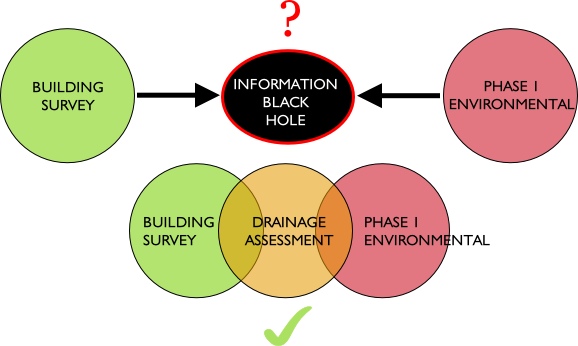
It is commonplace to have a Building Survey and a Phase 1 Environmental but that leaves a big gap of unknowns as drains are not covered properly by either. Based on a £5m investment, a Drainage Assessment routinely identifies defects totaling around the 1% mark, sometimes significantly more. Now and again it throws up major previously unidentified ‘strategic’ problems which call into question the viability of the investment and it is in these cases that the drainage assessment is truly invaluable.
At the very least, it is always helpful to have as much information as possible when taking the decision where to invest a client’s money as it helps to make the best investments and to maximize due diligence.
|
|
|
|
Drainage Liabilities & Investment Returns
|
|
Suitable and effective drainage is a fundamental requirement of any commercial property investment. Hidden from normal view and often overlooked, drains have the potential to produce liabilities which can interrupt investment cash flows. Although some costs can be recouped from the tenants’ service charge, in some cases, shared infrastructure and the provision of pollution prevention measures such as oil interceptors may fall to the landlord. Pollution remediation following tenant vacancy, bankruptcy or even through attacks of vandalism may incur large financial costs to the landlord thus knowing the suitability of prevention measures and precautions should be a necessary part of investment decision making and Due Diligence.
|
|
Structural condition & operation
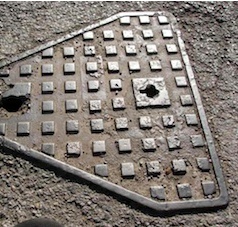
The most obvious liability presented by a drainage system is the repair and maintenance of the drainage infrastructure. Not just the below-ground drain pipes themselves, but the disrepair and failure of inspection chambers, inspection covers, oil interceptors, pumping chambers etc. can all be costly. We thus assess the physical condition of the drainage infrastructure immediately before the purchase to assess its general condition, how much needs to be spent to bring it up to standard and the predicted maintenance outlook for the future.
|
|
Environmental Risk
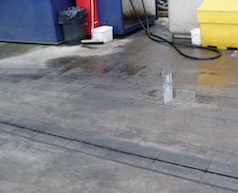
In the context of drains being one of the primary pathways for environmental pollution from a commercial site, the presence or otherwise of pollution prevention measures can help to minimize liabilities and fines. Also, contamination of the site itself, for example from inadequate drainage pollution prevention measures is something an investor would obviously want to avoid.
|
|
Site/environs specific factors and environmental sensitivity
The condition, operation and environmental risk presented by drainage systems should be assessed in relation to the context of the site and it surroundings. For example, if the site forms part of a Groundwater Source Protection Zone then any pollutants seeping into the ground, for example from defective drains, have more potential to cause damaging, and hence costly, environmental pollution. Similarly, if the surface-water discharges to a nearby nature reserve then, again, there is a higher potential for environmental pollution which should be assessed.
|
|
Legal
In many cases, surface-water or foul drains leave the site in more than one place, often running to another property before reaching a public sewer. It is very important to know where drains leave a site so that the necessary easements to discharge the drains can be negotiated and purchased. Similarly, it is also important to know when and where drainage from other sites discharges onto the site being purchased. ‘As-built’ plans may be available but we find these are often inaccurate or incomplete - the only way to be sure is to get down and physically have a look on site.
|
|
Design/suitability & strategic/design problems
We can provide, within the limits of the information available, an analysis of the design and suitability of the drains for the requirements of the site.
|
|
Projected maintenance outlook
It is useful to factor in the projected drainage maintenance costs, likely disruption caused by defects and undertaking repairs, and possible tenant dis-satisfaction.
|
|
Benefits of a Drainage Assessment
|
|
There are several key benefits to having a Pre-Acquisition Drainage Assessment when dealing with commercial property investment.
|
|
Decision-making & Negotiation
Based on a £5m investment, a Drainage Assessment routinely identifies defects totaling around the 1% mark. Now and again it throws up major previously unidentified ‘strategic’ problems which call into question the viability of the investment - it may not be what you want to hear but better to be aware to prevent an unwise investment or later litigation for negligence. On the other hand it may just confirm that everything really is ok.
|
|
Benefit from
• Being aware of what drainage assets are included and, more importantly, what condition they are in.
• Being aware of the potential for environmental pollution and associated costs and fines.
• Being aware of immediate costs for the purposes of negotiation.
• Being aware of the impact of the drainage system on investment cash flows.
• Being aware of the suitability of the drainage system for the needs of the site and how well they operate.
• Being aware of the predicted future maintenance outlook for the drainage system.
|
|
Professional
Whether you are an investor or a Due Diligence surveyor, there are significant professional benefits of routinely commissioning a Drainage Assessment at the pre-acquisition stage in terms of
• A more robust and broader based due diligence - ensure professional competency and minimize professional risk and the potential for negligence-based litigation.
• Competitive advantage - offer a more robust professional service than your competitors.
• Deeper understanding - more relevant information means better decisions.
|
|
Legal
Helps ensure essential easements to discharge drains from the site are included in the purchase.
|
|
Asset Management
The report and findings from a Pre-Acquisition Drainage Assessment, especially the schedule of drainage assets, their current condition and clear recommendations can form the basis of a post-acquisition asset management system or maintenance programme.
|
|
|
 A drainage survey bridges the gap left between a Building Survey and a Phase 1 Environmental A drainage survey bridges the gap left between a Building Survey and a Phase 1 Environmental -Rob Shirley, Partner WJ Shirley LLP -Rob Shirley, Partner WJ Shirley LLP
|
|
|
Drainage liabilities come from many more sources than the structural condition of underground pipes so just having a CCTV survey when investing in property can leave you exposed.-
|
|
Establishing Environmental Risk
|
|
Drainage systems are often the primary pathway for environmental pollution yet are largely overlooked by a Phase 1 Environmental.
|
|
|
One litre of solvent can contaminate 100 million litres of drinking water-
|
|
|
 Site by Web Design Lincoln